
Brought to you courtesy of Catholic Ireland
2nd Sun Easter -Year A
– 12–04–2026 –
SECOND SUNDAY OF EASTER
(Divine Mercy Sunday)
Gospel text : John 20:19-31
vs.19 In the evening of the same day, the first day of the week, the doors were closed in the room where the disciples were, for fear of the Jews. Jesus came and stood among them. He said to them, “Peace be with you,”
vs.20 and showed them his hands and his side. The disciples were filled with joy when they saw the Lord,
vs.21 and he said to them again,
“Peace be with you. As the Father sent me, so am I sending you.”
vs.22After saying this he breathed on them and said: “Receive the Holy Spirit.
vs.23 For those whose sins you forgive, they are forgiven;
for those whose sins you retain, they are retained.”
[caption id="attachment_44576" align="alignright" width="234"]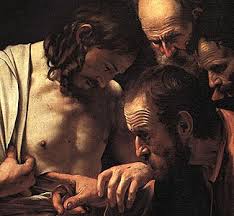
vs.24Thomas, called the Twin, who was one of the Twelve, was not with them when Jesus came.
vs.25 When the disciples said, “We have seen the Lord,” he answered, “Unless I see the holes that the nails made in his hands and can put my finger into the holes they made, and unless I can put my hand into his side, I refuse to believe.“
vs.26 Eight days later the disciples were in the house again and Thomas was with them. The doors were closed, but Jesus came in and stood among them. “Peace be with you” he said.
vs.27 Then he spoke to Thomas,
“Put your finger here; look, here are my hands.
Give me your hand; put it into my side. Doubt no longer but believe.”
vs.28 Thomas replied, “My Lord and my God!”
vs.29 Jesus said to him: “You believe because you can see me. Happy are those who have not seen and yet believe.”
vs.30 There were many other signs that Jesus worked and the disciples saw, but they are not recorded in this book.
vs.31 These are recorded so that you may believe that Jesus is the Christ, the Son of God, and believing this you may have life through his name.
**********************************
This week We have three sets of homily notes to choose from. Please scroll down the page for the desired one.
Michel DeVerteuil : The late Holy Ghost Priest, Specialist in Lectio Divina from Trinidad and Tobago, W.I.
Thomas O’Loughlin: Professor of Historical Theology, University of Nottingham.
Donal Neary SJ: Editor of The Sacred Heart Messenger
*******************************************************
Michel de Verteuil
Lectio Divina with the Sunday Gospels – Year A
www.columba.ie
General Comments
Today’s gospel reading, like all of St John’s gospel, is an interweaving of several themes. It is not possible to follow up all the themes together; we must focus on one at a time, going deeply into it and allowing it to reveal some deep truth about Jesus, about ourselves and about life.
In this reflection I invite you to focus on the apostle Thomas; this is in accord with the Church’s liturgical tradition for the Second Sunday of Easter. Therefore, although the reading includes two of Jesus’ resurrection appearances – both of them deeply moving – we stay with the second, the dialogue between Jesus and Thomas, and let the earlier appearance provide the context. We are free to identify either with Thomas or with Jesus, but not with both at the same time. We need to be clear on how we understand Thomas. The popular interpretation puts him in a bad light, as “doubting Thomas“. This, however, is not the movement of the text which culminates in Thomas’ admirable act of faith, the most explicit in the New Testament – “My Lord and my God”. We are more in accord with the spirit of the text, therefore, when we look at Thomas as a model of faith. He was right to insist that before he could believe in Jesus’ resurrection, he must see the holes the nails made in his hands, put his finger into the holes and his hand into the great wound made by the centurion’s lance.

Thomas then teaches us the important lesson that we must not separate the resurrection from the cross, since we are called to be followers of Jesus. He also teaches us the truth of the Church and of our individual spiritual growth. We cannot live the life of grace, the “risen life”, authentically unless we bear in our bodies the wounds of the cross. This means being conscious that we develop the capacity to love and to be loved only by dying to ourselves. Our wounds are also a constant reminder of our frailty and that it is God’s grace that raises us up to new life.
St Paul’s epistles show that the first Christians needed the corrective of Thomas’ faith. They tended to relate with the risen Jesus without reference to his crucifixion. They forgot that they were called to be “followers of Jesus crucified,” choosing to die with him so that they could rise with him (see especially 1 Corinthians 1).
We Christians fall into the same error today when our lives and our teachings proclaim an abstract “disembodied” Jesus, dispenser of graces and teacher of morality; we forget the historical person who was put to death for proclaiming the kingdom of God.
Thomas professes the true faith of the church. We too must insist that the Jesus we follow is the true Jesus, the one whose risen body bears the wounds of Calvary.
Jesus is the model leader and spiritual guide. He is pleased to give Thomas the assurance he is looking for, and then challenges him to look forward to the day when he will believe without seeing – always in the Jesus who passes through death to resurrection.
The blessedness of believing without seeing came from the experience of the early church. Jesus is not moralising but inviting Thomas (and us) to celebrate great people of faith – in our communities and worldwide – who take up their cross with confidence in the resurrection.
As always in our meditation we must not limit ourselves to personal relationships. We celebrate the resurrection faith lived by communities, nations and cultures.
Scripture Prayer
“You who remain ever faithful even when we are unfaithful, forgive our sins and grant that we may bear true witness to you before all men and women.” … Pope John Paul II, Service of Forgiveness, March 2000

We thank you in particular for the great day when our Church publicly asked forgiveness from other religions and cultures.
We thank you for good Pope John XXIII who opened up the papacy and the Church for a new age with the Vatican II Council and Pope John Paul II who, like Jesus with St Thomas, invited us to see the holes that the nails of arrogance and self-righteousness made into the body of Christ, and to put our fingers into the holes, and to put our hands into the huge wound which the lust for power made in his side, so that we would recognise how, just as you raised Jesus from the dead, you do not allow his Body, the Church, to remain in the tomb, but always raise her up to new life.
Lord, we thank you for the times when reconciliation emerged triumphantly from the tomb of conflict:
*the spirit of dialogue between our Church and Jews, Muslims, Hindus, African, Alaskan, American and other traditional religions;
* the European Union created by former enemies;
*the Good Friday Agreement in Northern Ireland – 30 years on;
*the ongoing pain of the peace processes ‘ in the Middle East and Eastern Europe
Do not let us forget the terrible legacy of hatred and resentment which had to be overcome;
invite us to put our fingers into the holes made by the nails,
our hands into the great wound made by lances,
so that we can recognise with awe and wonder
the spark of your divine life that is within us all.
Remind us too of those who worked for peace during the long years of conflict when they seemed to be working in vain.
How blessed were they who did not see and yet continued to believe in your power to bring new life into the world.
“Whoever sees anything of God, sees nothing of God.” ..Meister Eckhart
Lord, lead us to the blessedness of not seeing and yet believing.
“Go for broke, always try to do too much, dispense with safety nets, aim for the stars.” … Salman Rushdie
Lord, we thank you for friends, leaders and spiritual guides who challenge us as Jesus challenged Thomas.
Whenever we commit ourselves to a cause because we have tested its reality, they invite us to experience the blessedness of believing without seeing.
“Beware of the seduction of leaving the poor to think about them.” ...Sean Van

we look for their resurrection but do not want to see their wounds:
~ young people have been deeply hurt and we serve them with pious exhortations;
~ we become impatient with those who continue to mourn the death of a spouse, a sibling or a child;
~ we think we can restore a broken relationship by merely saying we are sorry;
~ we propose reconciliation between all warring factions acknowledging past wrongs;
~ we pray for peace in our world and do not agonize over our many terrible injustices.
~we hope for the just sharing of the earth’s goods and resources by all nations.
We thank you for people like Thomas who will not let us away with easy solutions; they insist that we must see the holes nails have made in the hands of victims, put our fingers into the holes and our hands into wounds lances have made in their sides, and only then believe that they have within them the capacity to rise to new life.
“We admitted to God, to ourselves, and to another human being, the exact nature of our wrongs.” ...Step 5 of the Twelve Step programme of Alcoholics Anonymous
Lord, when we are converted from an addiction to alcohol, drugs, power, or sex or whatever drains our life of energy and love.
We are so anxious to make a new start that we forget the hurt which was at the root of our problems,
– the loneliness of our childhood,
– any sense of racial inferiority or superiority,
– any visible or invisible disabilities we suffer,
– any fear of failure we live with.
We thank you for sending us friends who insist that we must face the reality of the past. We pray that like Jesus welcoming Thomas, we will invite them to put their fingers into the holes the nails have made and their hands into his side, so that we can walk together in our new life.
**************************************************
Thomas O’Loughlin
Liturgical Resources for the Year of Matthew
www.columba.ie
Introduction to the Celebration
Characteristic of the people who rejoice in the Lord’s victory over death is that they gather regularly for ‘the breaking of the bread’. In this action we recognise the presence of the risen Christ and are invited to see that as we share a single loaf and cup, so we share in his new life.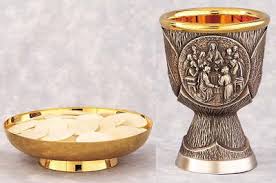
This new life has the promise of overcoming division, sin, and death: but are we really prepared to share with those around us? And if we are willing to accept forgiveness from the risen Lord, are we also ready to offer forgiveness?
Homily Notes
1. There is a theme running through all the readings today which captures a key sense of the whole liturgy – that we as Christians live in ‘in-between’ times. On the one hand, we cry out that ‘Christ is truly risen, Alleluia’ (the great Easter slogan) and death has been put to flight; but on the other hand, we know we must walk by faith for around us there is no shortage of greed, death and destruction. Here is the great tension of discipleship: we must believe that Christ has conquered (or else Christian faith is meaningless) and we must work to bring it about.
In short, we live and act in hope. Down the centuries many have tried to resolve this tension in favour of either believing or working (this is the ‘Pelagius vs Augustine’ debate that has polarised so much western theology) rather than seeing in this tension the very structure of human life: we must grow to become what we most truly are. In Easter terms, we know that Christ has conquered and so life does not end in death, but this new life must be established both in our hearts (through having a new imagination whereby we view the world in terms of what it can become through love, generosity and forgiveness), and in the world through our Christian action.
[caption id="attachment_44581" align="alignleft" width="272"]
2. While we may not find this explanation convincing, nor like the implications of imagining God using our lives as a training-ground – for that invites the impious fixing of the metaphor in presenting God testing some of his children to destruction – we must confront the same basic question to our believing that that author faced: we believe Christ has conquered, yet we experience death and pain as all too real around us. If we do nothing else in the homily today than acknowledge this basic dilemma of faith, we will have done much.
3. It is all too easy to pretend that the dilemma does not exist or, at least, would not bother us if we were ‘proper’ believers. One of the common surrogates for Christian faith is presenting Christianity as giving some immediate reward: a happier or more contented life, material benefits, or some notion of having a ‘God on your side‘ – this is the sales-pitch of the televangelists. Equally, many wonder why ‘bad things happen to good people‘ – the nagging doubt about the ‘value‘ of faith when it ‘seems to make no difference’ whether one is a believer or not. Both positions ignore the basic Christian dynamic: Christ promises us the kingdom, but does so while challenging his followers to build it in their lives and world. The kingdom is not a child’s wonderland were we are simply lodged by an indulgent parent, but the completion of our human work that must engage our wills, our skills, and our hearts.
4. There is another matter we should note today. This liturgy takes place on ‘the octave day’ of Easter and, historically, this day was seen as completing the’ great day of resurrection’ that has lasted since the Easter Vigil. Such a notion of a ‘ great day‘ is beyond the imagination of most people in our society. For almost everyone this is just another weekend and the ‘long weekend’ of Easter already seems long past. So there is a dissonance between the liturgy, and perhaps its president declaring how special today is, and the average person’s emotions. There is no simple answer to this phenomenon: the twentieth century saw the secularisation of time into just two categories of ‘work [time]’ and ‘time-off’ where material production was the measure of human life.
5. Making this breaking and eating shares of a single loaf, and drinking from a common cup, the central practical part of the celebration, with all its difficulties, delays, and need for explanation, will mark out this day as no amount of words or banners or peripheral decorations can.
**************************************************
Fr Donal Neary, S.J
Gospel Reflections for the Year of Matthew
www.messenger.ie/bookshop/
Thanks, Thomas!
Thomas … thanks!
For bringing honesty into our faith. He didn’t pretend that he was better than he was. He began by wanting proof and ended by being glad of faith. He is the patron saint of transitions and steps in faith. Faith is a journey. He is the saint of faith in our times. The community was the place he found faith, having lost it when he tried to go it alone. Then he came back to the community of faith and went on a journey of life that took him to martyrdom in India.
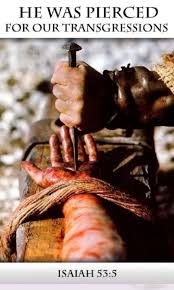
In the faith community of the church we can keep our faith. Our faith grows here too. Thomas looked for faith by wanting to touch the wounds of Jesus. When Jesus invited him to do so, he found he didn’t need to. He found faith in being present with the wounded Christ and discovered there his faith in the glory of Christ.
We can do the same. What was said to Thomas is said to us all: ‘You believe because you can see me. Blessed are those who have not seen and yet believe.’
Recall those who have strengthened your faith and be grateful;
picture each person and pray for each of them.
Lord, I believe, strengthen my belief